
Complete Guide to PVC Curtain Installation for Industrial Facilities


Buying a good PVC strip curtain is only half the job. A lot of facilities invest in flexible PVC strip curtains, only to see them underperform simply because of how they were installed — wrong height, wrong overlap, mounted on the wrong side of a temperature gap. Installation affects how well the curtain actually seals a doorway, and getting it right makes a real difference in energy savings, hygiene, and durability.
This guide walks through what actually matters during installation, and what to expect from a good PVC strip curtain supplier along the way.
Why Installation Matters as Much as the Curtain Itself
A PVC strip curtain works by creating a physical barrier that flexes open for movement and closes back into place. If it's installed incorrectly, this barrier doesn't seal properly, and most of the benefits — temperature control, dust reduction, pest prevention — get significantly reduced. This is one of the most common reasons businesses feel like their strip curtain "isn't really working," when the actual issue is installation, not the product.
Step 1: Measuring the Doorway Correctly
Before ordering the PVC strip curtain, the doorway needs to be measured accurately. Measure the width, height, and any obstructions like frames, tracks, or overhead equipment. The PVC strip curtains are typically ordered wider than the doorway itself since the strips need enough overlap on both sides to seal properly. Getting this measurement wrong is one of the common installation mistakes leading to gaps at the edges that defeat the purpose of the PVC strip curtain.
Step 2: Choosing the Right Mounting Hardware
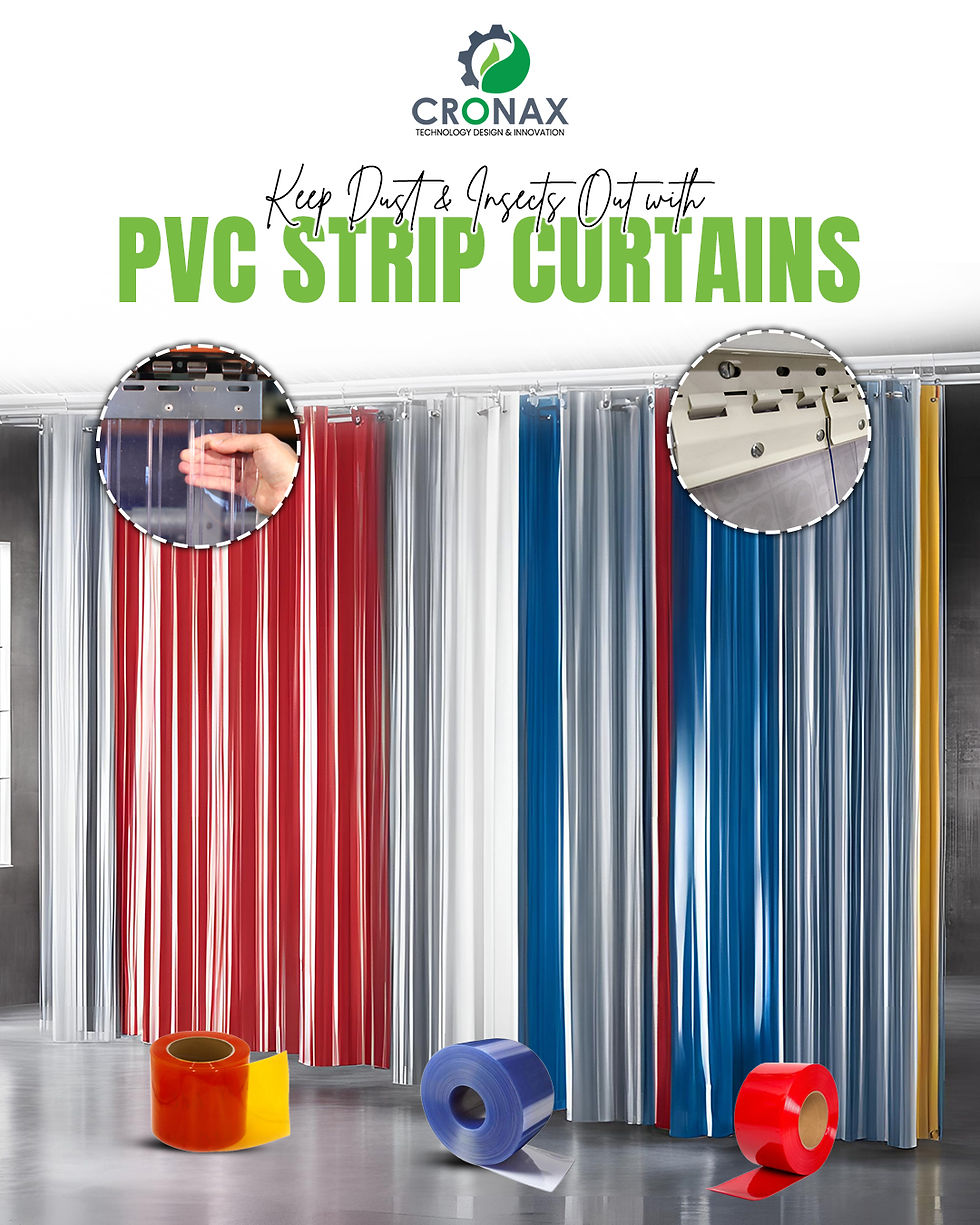
The strips hang from a mounting rail or track fixed above the doorway. This hardware needs to be rated for the weight of the strips and securely fixed to a stable structure — a weak or improperly anchored mount leads to sagging over time, which reduces the seal quality. For high-traffic doorways, hardware built for frequent flexing and repeated impact from trolleys or forklifts matters more than it might seem.
Step 3: Getting the Overlap Right
Strip overlap is what actually creates the seal. Strips are usually installed with a 50% overlap, meaning each strip covers half of the strip next to it. Too little overlap leaves gaps; too much makes the curtain harder to push through and can cause unnecessary wear. A properly calculated overlap balances an effective seal with ease of movement through the doorway.
Step 4: Choosing Between Single and Double-Ply Strips
Single-ply strips are lighter and easier to push through, suited to lower-traffic doorways. Double-ply strips, often used for cold storage or high-traffic industrial doorways, offer better insulation and durability but require sturdier mounting hardware. Choosing the wrong configuration for the application is another common installation issue that affects long-term performance.
Step 5: Positioning for Temperature and Traffic Zones
For cold storage applications, the curtain typically needs to be installed on the cold side of the doorway to minimize condensation buildup on the strips. For high-traffic industrial doorways, strip curtains are sometimes installed in a double layer — offset from each other — to improve sealing without significantly restricting movement. Getting this positioning wrong is a common reason curtains underperform in demanding applications.
Step 6: Ongoing Maintenance After Installation
Even a correctly installed PVC strip curtain needs periodic checks — strips can crack, discolour, or lose flexibility over time, especially with constant use or temperature extremes. Replacing individual damaged strips rather than the entire curtain is usually possible and more cost-effective, provided the supplier offers matching replacement strips.
What to Expect From a Good PVC Strip Curtain Supplier
A reliable PVC strip curtain supplier should offer more than just the product — proper installation guidance, correct strip specification for your specific application, and support for replacement strips down the line. Cronax Industries is one supplier that provides this kind of application-specific guidance, helping facilities choose the right strip thickness, overlap, and mounting setup for cold storage, warehouse, or food-processing doorways.
Common Installation Mistakes to Avoid
Ordering strips too narrow for the doorway, leaving gaps at the edges
Using weak or improperly anchored mounting hardware
Installing single-ply strips in high-traffic or cold storage applications where double-ply is needed
Ignoring which side of a temperature gap the curtain should face
Skipping periodic inspection for cracked or worn strips
Avoiding these mistakes is largely a matter of working with a supplier who understands installation, not just manufacturing. Cronax Industries works directly with facilities to specify flexible PVC strip curtains matched to the doorway, traffic pattern, and temperature conditions involved, rather than offering a single generic product for every application.
Choosing the Right Supplier for Your Facility
Since installation quality depends heavily on getting the right product specification from the start, it's worth involving your PVC strip curtain supplier early, rather than treating installation as an afterthought once the curtain arrives. Comparing a few suppliers, including Cronax Industries, on installation support and application-specific guidance is a more useful approach than comparing on price alone.
Bottom Line
A PVC strip curtain is a simple product, but installation is where a lot of its real-world performance is decided — correct measurements, proper overlap, the right hardware, and correct positioning all matter. Working with an experienced PVC strip curtain supplier like Cronax Industries helps industrial facilities get the installation right the first time, avoiding the common mistakes that quietly reduce a curtain's effectiveness.


Comments