
How CleanRoom Air Showers Remove Dust and Particles Before Cleanroom Entry


Cleanrooms are designed to maintain extremely low levels of dust, microbes, and airborne particles. Even a small amount of contamination can damage products, affect research results, or cause compliance issues. One of the most effective tools used to protect cleanroom environments is the air shower.
Air showers act as a controlled entry system that removes dust and particles from people and materials before they enter a cleanroom air shower zone. Let’s understand how air showers work, why they are so effective, and why industries rely on them for contamination control.
Why Dust Control Is Critical Before Cleanroom Entry
People are the biggest source of contamination in cleanrooms. Dust, hair, fibers, skin flakes, and microbes easily stick to clothing, shoes, and equipment. When someone walks into a cleanroom without proper decontamination, these particles spread into the air and settle on sensitive products and machines.
Industries such as:
Pharmaceuticals
Biotechnology
Electronics & semiconductors
Food processing
Medical device manufacturing
cannot afford this risk. This is where air shower rooms become essential.
What Is an Air Shower?
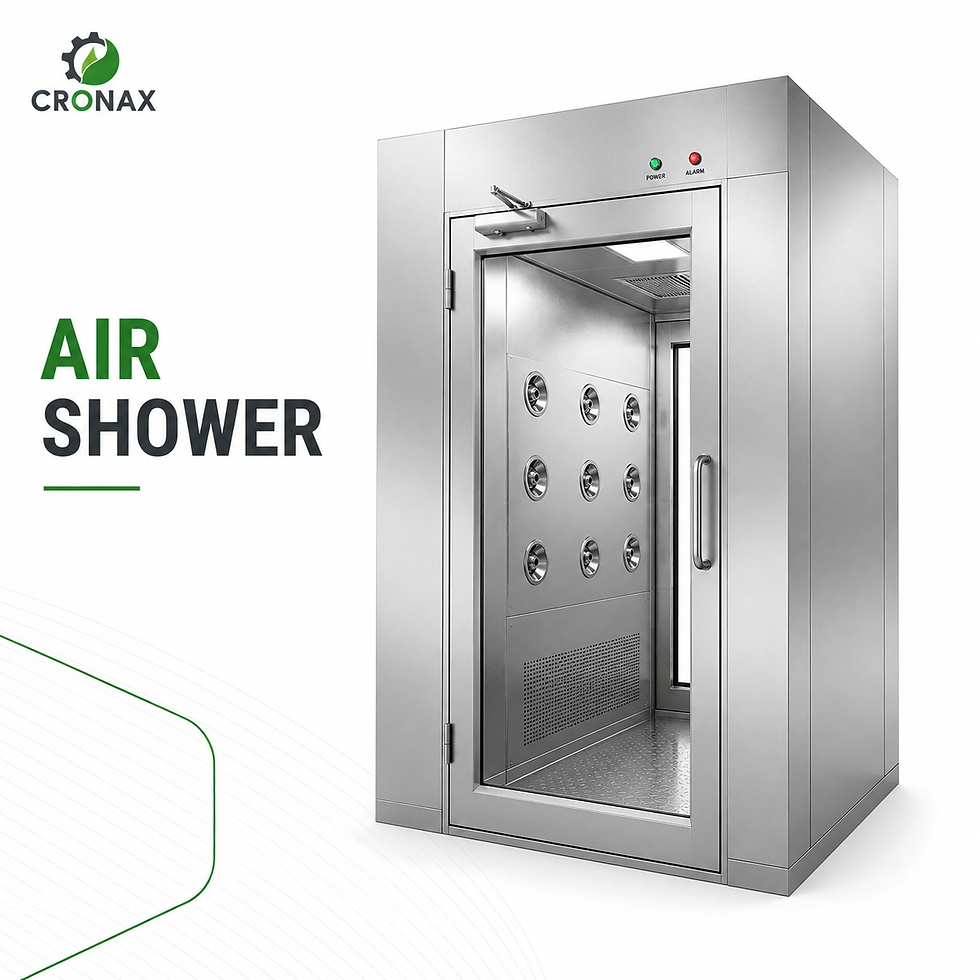
An air shower is a closed chamber installed at the entrance of a cleanroom. It uses high-velocity, HEPA-filtered air to blow away dust and particles from personnel or materials before entry.
Most air shower manufacturers design these systems to operate automatically, ensuring consistent cleaning every time someone enters the clean area.
Step-by-Step: How Air Showers Remove Dust and Particles
1. Controlled Entry into the Air Shower Room
When a person enters the air shower room, the outer door closes automatically. This prevents outside air and contaminants from entering the cleanroom.
Only one door operates at a time, ensuring proper isolation.
2. Activation of High-Velocity Air Jets
Once the door closes, powerful air nozzles release clean, filtered air at high speed (usually 20–25 m/s).
These air jets are placed strategically on:
Side walls
Ceiling
Sometimes the floor
This multi-directional airflow ensures dust is removed from all angles.
3. HEPA Filters Trap Dust and Particles
The air used in air showers passes through HEPA filters, which can trap 99.97% of particles as small as 0.3 microns.
Dust, lint, pollen, and microbes blown off clothing are pulled into the return air system and captured by the filters instead of being released back into the environment.
This makes air showers extremely effective compared to manual cleaning methods.
4. Cyclonic Airflow for Complete Cleaning
The airflow inside an air shower clean room system creates a cyclonic effect. This means particles are continuously pushed away from the body until they are fully removed.
This process is much more reliable than sticky mats, brushing, or wiping.
5. Timed Cleaning Cycle
Most air showers operate for 15–30 seconds, which is enough to remove surface-level contamination without slowing down workflow.
Once the cycle is complete, the cleanroom door unlocks automatically.
6. Clean Entry into the Cleanroom
After the air shower cycle, the person or trolley enters the cleanroom with significantly reduced contamination levels.
This step ensures:
Cleaner air quality
Lower particle count
Reduced risk of product rejection
How Air Showers Are Better Than Traditional Dust Control Methods
Traditional methods like:
Sticky mats
Manual wiping
Shoe covers alone
are not enough for high-grade cleanrooms.
Air showers provide:
Consistent results
Automated operation
No human error
Faster processing
Higher hygiene standards
That’s why modern facilities prefer air showers over outdated solutions.
Types of Air Showers Used for Dust Removal
Reliable air shower suppliers offer different models based on usage:
1. Personnel Air Showers
Designed for individuals entering cleanrooms.
2. Multi-Person Air Shower Tunnels
Used in large factories with heavy staff movement.
3. Material or Trolley Air Showers
Clean raw materials, tools, and equipment before entry.
4. Stainless Steel Air Showers
Used in pharma, food, and corrosive environments.
Industries That Rely on Air Showers
Air showers are widely used by:
Pharmaceutical manufacturers
Electronics & semiconductor plants
Food and beverage units
Hospitals and laboratories
Cosmetic manufacturing
Aerospace and defense industries
Any industry that values cleanliness and precision depends on air showers.
Benefits of Using Air Showers for Cleanroom Entry
✔ Removes dust and particles effectively
✔ Reduces microbial contamination
✔ Improves product quality
✔ Supports regulatory compliance (GMP, ISO, HACCP)
✔ Lowers cleanroom maintenance cost
✔ Improves worker safety
✔ Enhances workflow efficiency
Choosing the Right Air Shower Manufacturer or Supplier
When selecting an air shower, always check:
HEPA filter quality
Air velocity
Noise level
Build material
Control system
Custom size options
After-sales service
A trusted air shower manufacturer ensures long-term performance and reliable contamination control.
Conclusion
Air showers play a critical role in removing dust and particles before cleanroom entry. By using high-velocity, HEPA-filtered air, they prevent contamination at the source—people and materials. This simple yet powerful system protects cleanroom environments, improves product quality, and helps industries meet strict hygiene standards.
For any business operating in controlled environments, installing a properly designed air shower clean room system is not just a choice—it’s a necessity.

Comments